
The Current State of Commercial Real Estate Investment Sales: A Mid-2025 Perspective
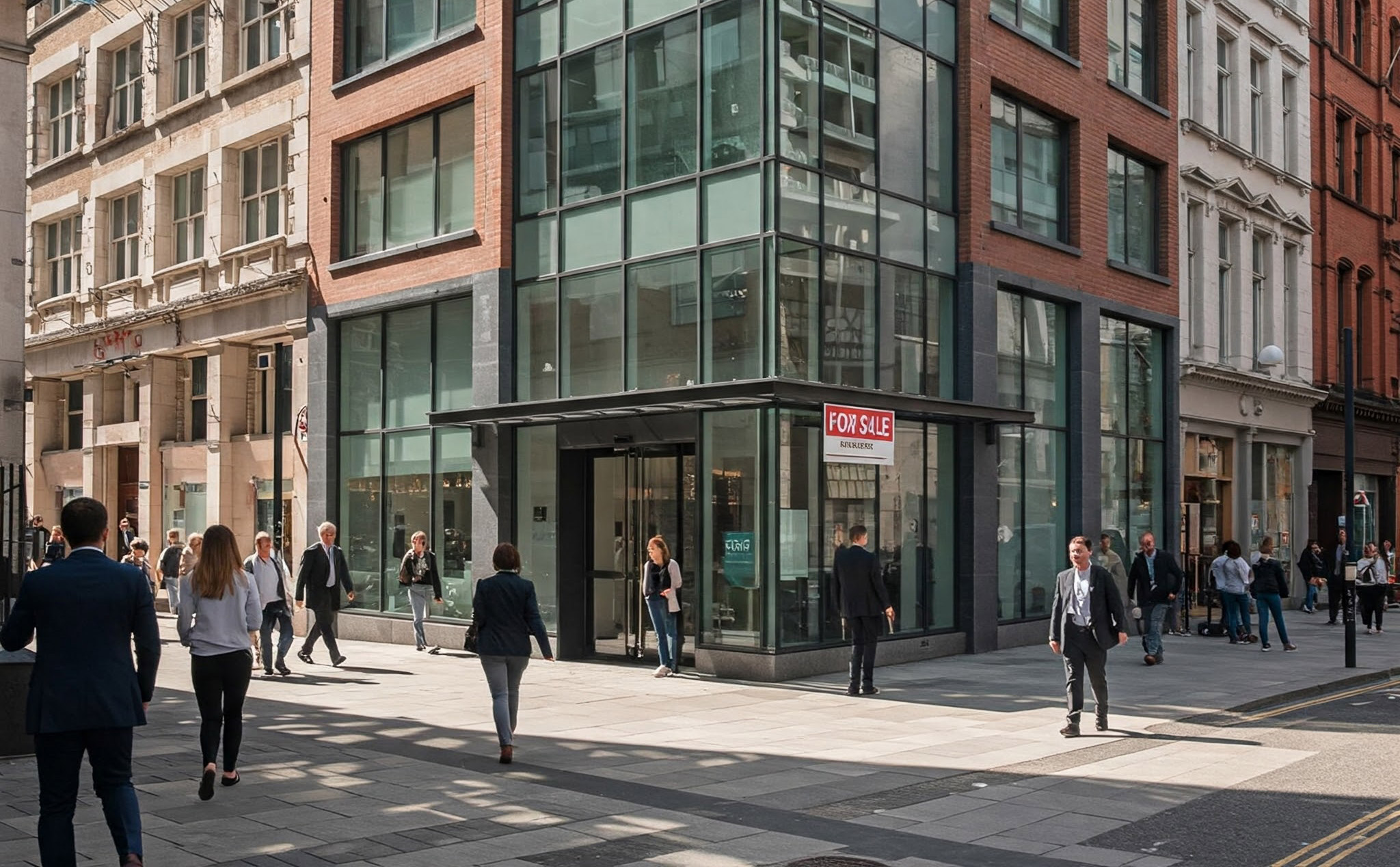
The commercial real estate (CRE) investment sales market in mid-2025 presents a complex picture, marked by a gradual recalibration and emerging opportunities after a period of significant adjustment. While challenges remain, particularly concerning financing costs and certain property sectors, a clearer path forward is beginning to materialize, driven by stabilizing valuations, selective investor confidence, and the continued strong performance of favored asset classes.
Transaction Volume and Pricing: A Slow Thaw
Following a period of subdued activity in the wake of interest rate hikes and economic uncertainty, 2025 is seeing a cautious increase in transaction volume. This uptick is largely attributed to a narrowing of the bid-ask spread that characterized the market over the past couple of years. Sellers have increasingly adjusted their pricing expectations to align with higher borrowing costs and market realities, while buyers have recalibrated their return requirements.
While overall transaction volume is not yet at pre-2022 peaks, the first quarter of 2025 showed promising signs in certain sectors, notably office sales, which saw a substantial year-over-year increase in volume and average pricing. This suggests that investors are beginning to re-engage, albeit with a keen focus on well-located, high-quality, or strategically positioned assets. The expectation among many market participants is for a more material increase in sales volumes in the latter half of 2025 as capital availability expands and market stabilization continues.
Pricing is stabilizing across many property types, with some indications of recovery in certain segments. However, significant discounts may still be necessary for underperforming or over-leveraged properties, particularly in the office sector, where valuations continue to face headwinds.
Debt Financing Landscape: Navigating Higher Costs and Tighter Terms
Access to debt financing remains a critical factor influencing investment sales. While capital is available, borrowing costs are notably higher than in the low-interest-rate environment of previous years. The Federal Reserve’s decision to maintain elevated interest rates, coupled with a significant volume of commercial mortgages maturing in 2025, contributes to a more stringent lending environment.
Lenders are exercising greater caution, with increased scrutiny on borrower creditworthiness, business plans, and property fundamentals. Loan-to-Value (LTV) ratios may be lower, and debt service coverage ratios (DSCR) are closely examined. This environment favors borrowers with strong financial standing and proven track records.
Despite these challenges, various financing options are available, including traditional bank loans, CMBS, and private credit. The CMBS market has seen a resurgence, particularly for lower-leverage, high-quality assets. Private lenders are also playing a more significant role, stepping in where traditional lenders may be more hesitant, though often at higher costs and potentially less favorable terms.
Upcoming loan maturities, particularly in the office sector, could lead to increased distressed opportunities as some borrowers may struggle to refinance in the current rate environment. This presents potential acquisition targets for well-capitalized investors.
Investor Sentiment and Target Asset Classes: A Flight to Quality and Resilience
Investor sentiment in mid-2025 is characterized by tempered optimism. While the overall outlook is more positive than in the recent past, uncertainty persists regarding economic trajectories and potential policy shifts. This has led to a continued preference for defensive and resilient asset classes that are less susceptible to economic volatility.
Multifamily, industrial, and certain retail sectors remain highly favored. Multifamily benefits from strong tenant demand driven by challenging homeownership affordability, though some markets, particularly in the Sun Belt, are grappling with the absorption of new supply. The industrial sector continues its robust performance, fueled by e-commerce growth and the need for efficient logistics and distribution networks. Retail, specifically grocery-anchored neighborhood centers and high-end retail in prime locations, is also performing well.
Alternative property types are gaining increased attention, with strong interest in data centers, life sciences facilities, student housing, and self-storage. These sectors are often driven by long-term demographic and technological trends, offering stable income streams and growth potential.
The office sector remains the most challenged, with elevated vacancy rates and ongoing uncertainty surrounding the future of work. However, there is growing consensus that the sector may be nearing a bottom, with selective investment activity focused on Class A properties and opportunities for adaptive reuse or conversion. Investors are exercising significant caution and underwriting rigorously in this space.
Economic Factors and Regional Variations: A Diverse Landscape
Broader economic conditions, including inflation, interest rates, and job growth, continue to influence the CRE investment sales market. While inflation has moderated from its peak, it remains a factor. Interest rate expectations are closely watched, with the potential for future adjustments influencing borrowing costs and valuations. Job growth, particularly in key markets, supports demand for various property types.
Regional variations are significant. Markets with strong population and job growth, particularly in the Sun Belt and Mountain regions, continue to attract substantial investment across multiple sectors. Industrial hubs and markets with thriving tech or healthcare industries are also performing strongly. Gateway markets, while facing challenges in certain sectors like office, are seeing renewed investor interest for opportunistic acquisitions.
Conclusion: Navigating a Market in Transition
The commercial real estate investment sales market in mid-2025 is a market in transition. While the rapid repricing phase may be stabilizing, challenges related to financing costs and sector-specific headwinds persist. However, opportunities are emerging for investors who can navigate this complex landscape.
A focus on resilient asset classes with strong fundamentals, coupled with a disciplined approach to underwriting and a clear understanding of financing options, is paramount. As the market continues to adapt to the prevailing economic conditions and the long-term impacts of changing work patterns and consumer behaviors, strategic investment decisions based on thorough analysis and a long-term perspective will be key to success in the current CRE investment sales environment.
Sources:
CMBS Market on Track for Reinvigoration in 2025 – Numerix
U.S. National Industrial Report April 2025 | CommercialEdge
2025 Commercial Real Estate Trends | JPMorganChase